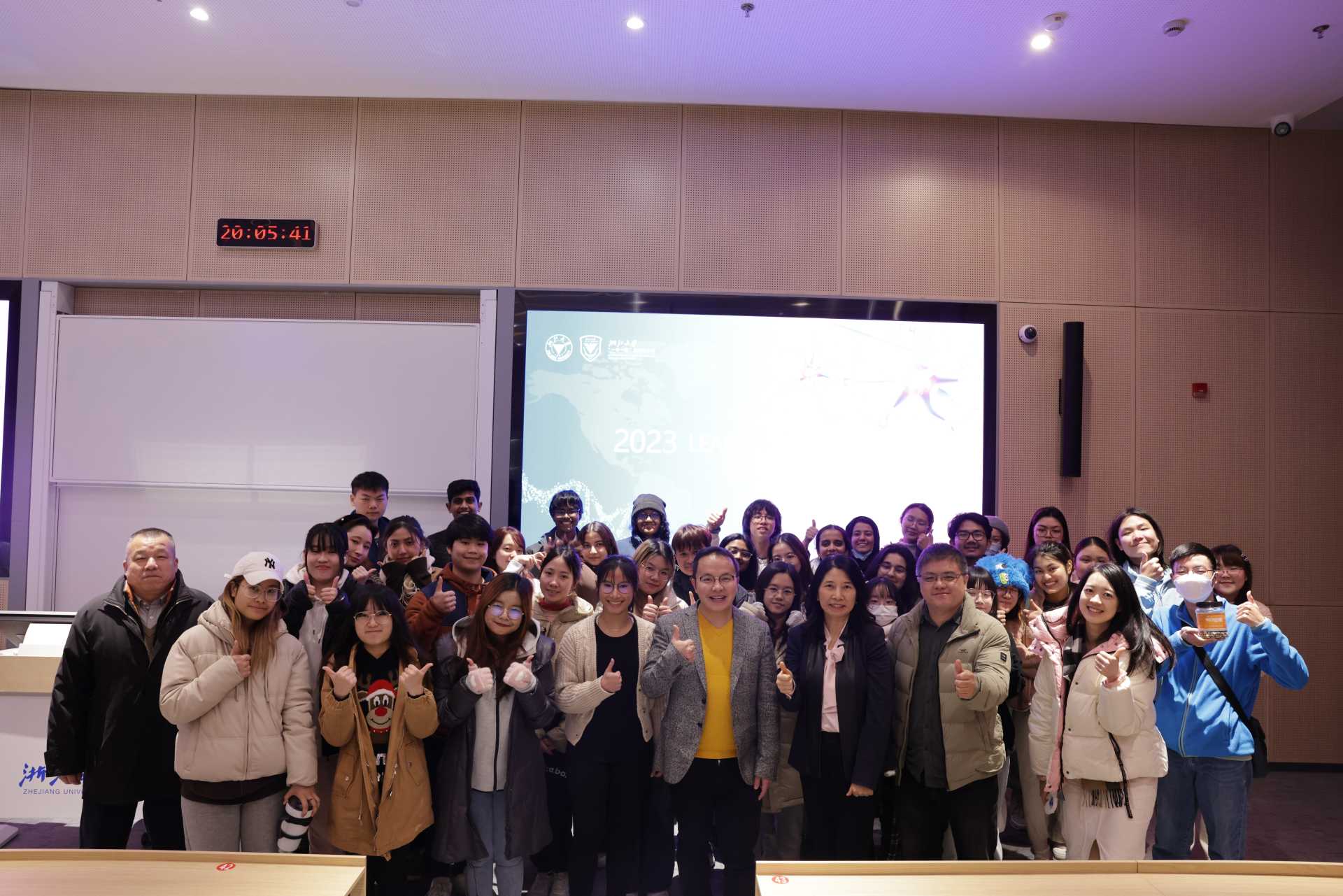
On December 18th, Dr. Shan Ling, the Marie Sklodowska-Curie Leading Fellow at Netherlands Institute for Neuroscience, gave an insightful lecture on the vast field of neuroscience and outlined his scientific journey, friendships and social impacts during his time studying abroad at the International School of Medicine, Zhejiang University (ZJU-ISM). The event was hosted by Vice Dean Prof. Chen Weiying and attracted more than 40 international students and faculty members.
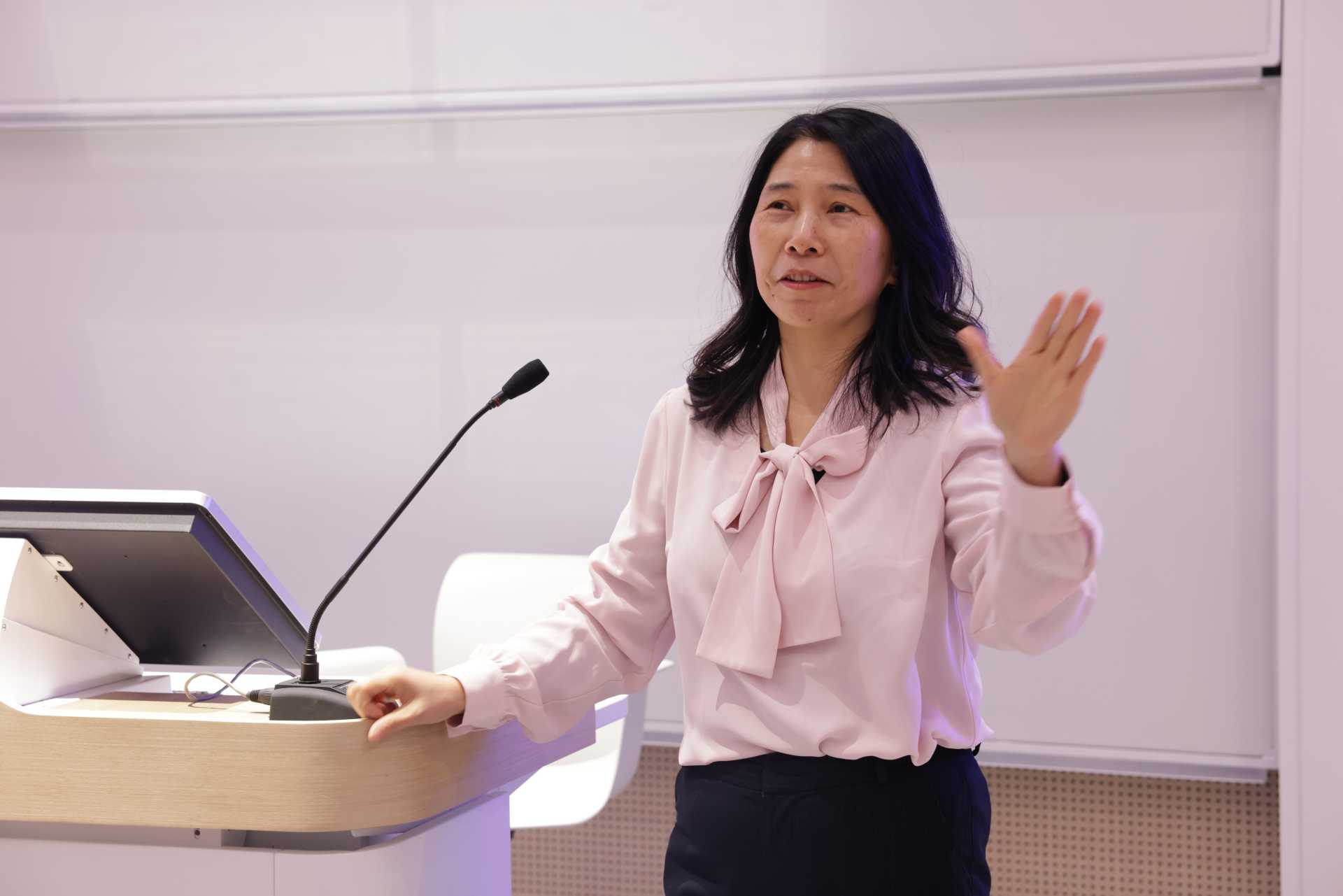
Prof. Chen Weiying inaugurated the Lead Lecture Series by first uncovering the reason behind its name. Explaining her future plan to invite prominent leaders from various academic fields and different walks of life to the campus to inspire and lead the students throughout their own college years.
Dr. Shan Ling began by quoting the neuroscientist Santiago Ramón y Cajal: “In such difficult fields, however, the full truth rarely emerges at one stroke. It is pieced together, little by little, through many trials and corrections.” He introduced his first PhD project in 2007. The scientific training he received was regarding the production and projection of the brain histamine system. Although he faced financial difficulties, eventually, not only did Dr. Shan Ling published 10 first-author papers and 4 book chapters, he was also awarded with the Young Investigator Award from the European Histamine Society, and over 400 thousand Euro funding for his project.
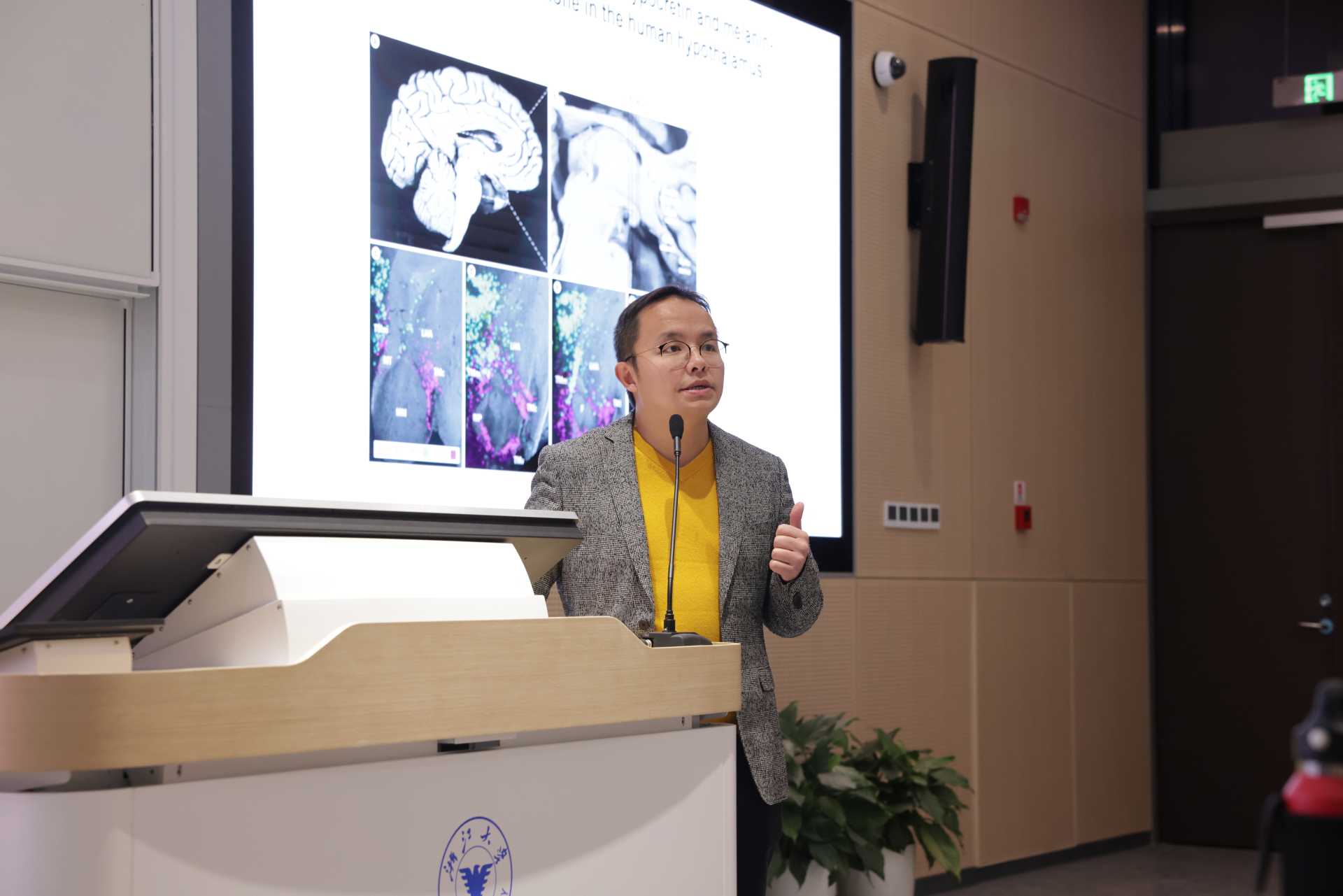
Delving deeper, Dr. Shan Ling revealed his keen interest in neurotransmitters that regulate sleep and arousal states. Hence, he spent his time doing research on narcolepsy, a neurological disease that is caused by the loss of hypocretin cells which has an important role in the modulation of wakefulness and rapid eye movement sleep. Dr. Shan Ling disclosed that he not only received funding from the European Union’s Horizon 2020 research and innovation program under the Marie Sklodowska-Curie grant, his research also won him the Young Scientist Award 2020 from the European Narcolepsy Network, supported by the Klaus-Grawe Foundation.
Reflecting on his PhD and Post-doc days, Dr. Shan Ling mentioned that life is not only about studying but also about the importance of friendships. Dr. Shan shared that he is now collaborating with his friend he met during the campus life to design a drug to help Amyotrophic Lateral Sclerosis (ALS) patients. What started out small has gotten bigger with more people involved in this project. This, Dr. Shan said, is just one example of how friendship could stem from anywhere, and how that same friendship could be the driving motivation and backbone support to achieve greater goals. When asked by a student about what keeps him motivated to do research despite the time and commitment required, Dr. Shan Ling shared that his continuous work is fueled by passion and an enthusiastic interest on his research topic. These two points, on top of hoping to be able to make a positive impact on the society through his research findings, help Dr. Shan to keep going despite setbacks.
As the lecture was about to approach the end, Prof. Chen Weiying expressed how happy she was to watch from afar her friend’s career rise. Prof. Chen hoped that by attending this lecture, the students could gain newfound knowledge and ignite interest in the medical field. Prof. Shen Ying, ZJU Qiu Shi Distinguished Professor who works mainly in the research field of brain health and neurology, commented, “After listening to Dr. Shan Ling’s experiences from the moment he got his first scientific training to the journey he had to undergo to strengthen his research background, I have to say that Dr. Shan Ling gave an excellent talk. I am sure that all of you, despite still being first year students, that you can achieve great things in the research field or medical field.”
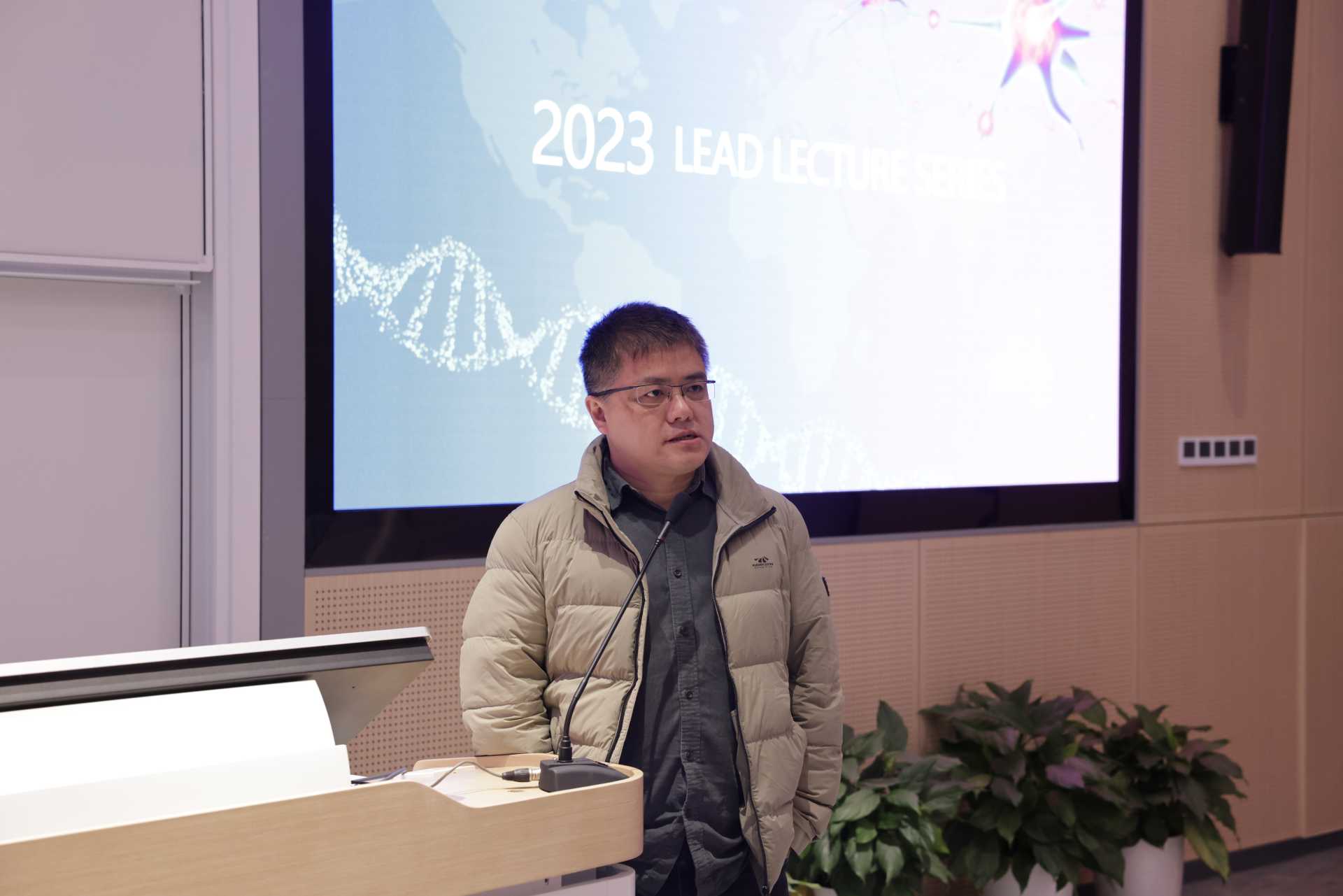
Captivated by the lecture, Kaentho Naphatsakorn, the 2023 MBBS student from Thailand, expressed, “This lecture provided me with a lot of insight and knowledge. Even though I am still a freshman and I have not touched the neuroscience topic yet, I completely understood what the professor said since whenever a question occurred to my mind, he immediately elaborated on what he was explaining before I even had a chance to ask my question. Thus, I really like his way of delivering information. Moreover, a quote he mentioned that stood out to me the most was ‘Nine out of ten won’t work, but only one would work’ and it has become one of my favorite quotes so far since it inspires me to keep going despite failure.”
Written by: Christine Carleone Winata, Han Qiqi