On January 27, 2026, the research team led by Professor Songmin Ying from the Center for Regeneration and Aging Medicine at Zhejiang University International Institutes of Medicine (ZJU-IIM) published an important study online in the journal Vita, titled Replication stress induces amplification of early replicating loci in the human genome.
Accurate DNA replication is critical for maintaining genome stability and genetic inheritance. However, cancer cells frequently undergo severe replication stress, which induces DNA damage, copy number variations, and chromosomal rearrangements. How replication recovery globally under stress has long remained elusive.
Using high-resolution, genome-wide nascent DNA sequencing, the team revealed that replication restart is not a random process, but concentrated at specific replication restart hotspots. The vast majority of these hotspots localize to early-replicating regions enriched with ORC1-binding sites.
Unexpectedly, the team also identified rereplication sites (reRSs) – genomic regions where early-replicating loci undergo abnormal rereplication even during late stages of the replication cycle. Mechanistically, these sites are driven by break-induced replication (BIR), supported by key functional factors PIF1 and SLX4, drives the formation of reRSs. These regions exhibit an open chromatin state and active transcriptional activity, and are significantly associated with DNA damage markers such as H2AX and RAD51, as well as copy number amplifications across multiple cancer types.
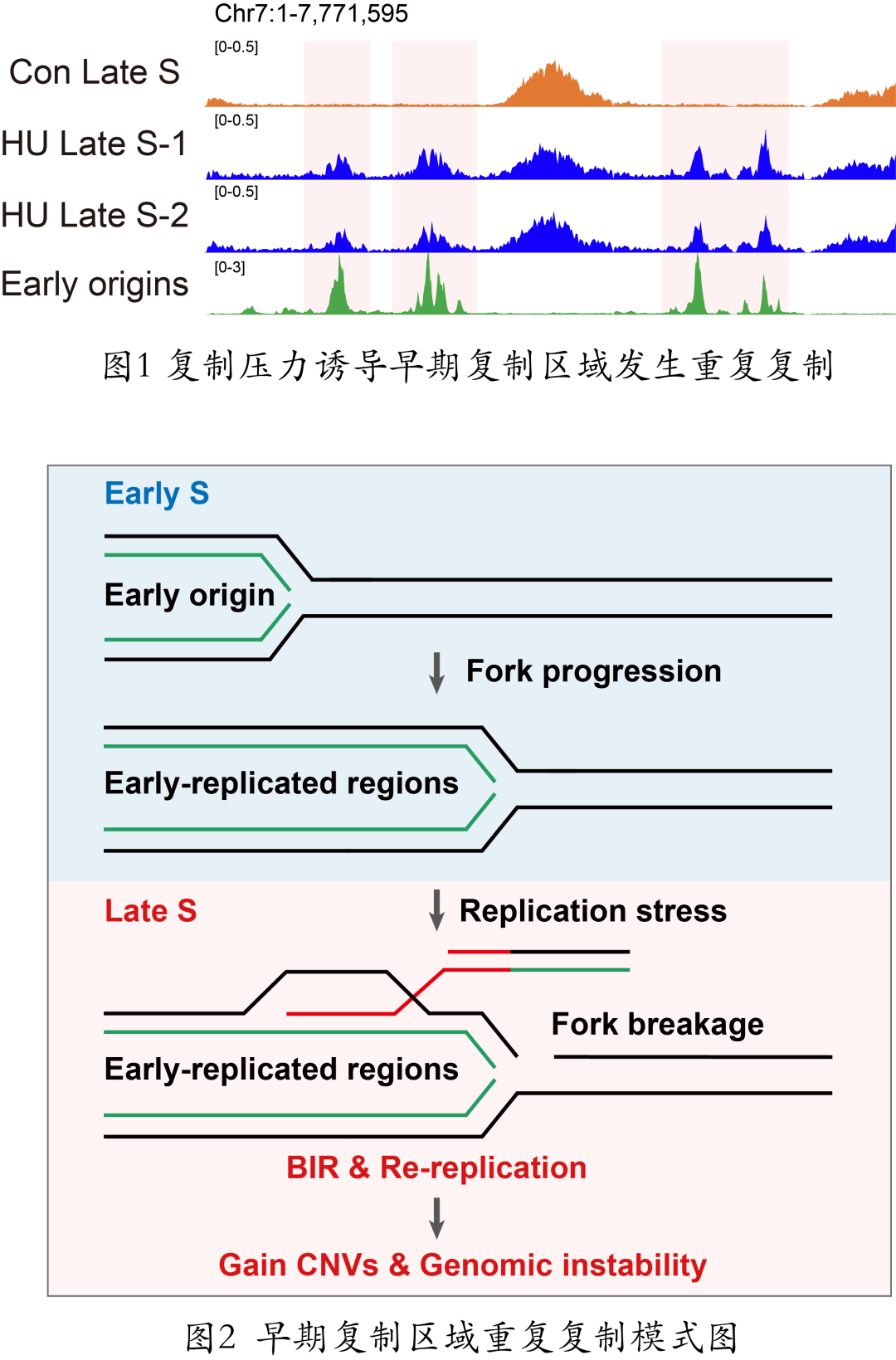
Figure 1. Schematic Diagram of Re-replication Patterns in Early-Replicating Regions
Figure 2. Replication Stress Induces Re-replication in Early-Replicating Regions
This study uncovers a conserved replication restart pathway that prioritizes early-replicating regions, as well as a novel BIR-mediated mechanism underlying oncogenic gene amplification. These findings provide crucial new insights into genome instability in cancer and inform the development of targeted therapeutic strategies for cancer treatment.
Link to the full article:
https://www.vita-journal.com/vita/EN/10.15302/vita.2026.01.0002