Dear students,
The 2026 China Belt and Road International Undergraduate Medical Innovation Competition is now open for registration!
This prestigious competition, organized by China Undergraduate Medical Innovation Tournament Committee, is a nationally recognized academic contest, making it one of the top-tier medical competitions in China. It is a great opportunity to enhance students’ research thinking and experimental skills, and to showcase talents on both domestic and international stages. Awards won at the preliminary, semi-final, and final stages will be recognized at the university, provincial, and national levels respectively.
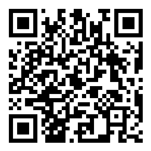
For preliminary registration, please have your team leader scan the QR code below to submit the initial information before 14:00 on March 11, 2026. For full details, please refer to the complete competition notice.

I. Theme
Uphold science, Seek truth, Embrace innovation
II. Objectives
Guided by the construction of “New Medicine”, the competition aims to promote the student-centered and capability-oriented educational concepts in higher education institutions, further strengthen the science-education collaboration in talent cultivation, encourage students to engage early in research projects, laboratories, and teams; In addition, it aims to enhance the training of undergraduates’ independent innovative scientific thinking and experimental skills, drive the reform of talent cultivation models, and explore and strengthen international cooperation and exchanges between domestic universities and institutions in countries along the Belt and Road. By providing a stage for students to showcase themselves, the goal of the competition is to cultivate a group of top-tier talents with original innovation awareness and ability.
III. Participation Format
Students participate in teams. Each team shall consist of 3 to 5 members (no less than 3, no more than 5). Each student must have a practical contribution to the work, and each student is limited to participating in one project per competition cycle. Each team shall have no more than 2 tutors. Each tutor is limited to guiding 2 projects per competition cycle. Interdisciplinary team formation within the same university is encouraged. Teams can also be formed across two universities (each university is limited to one cross-university work, which counts towards the leading university’s semi-final recommendation quota; collaboration with foreign universities to form joint teams for international cooperation and exchange is encouraged, with the foreign university taking the lead in participating in the Competition; awards won by such cross-university joint teams will only be counted under the leading university). Note: After the work is submitted for registration, team members, their order, and tutors cannot be changed. Students who withdraw during the subsequent semi-finals or finals can be removed, but members cannot be added.
IV. Discipline Track Settings
Each work shall register for participation according to the track of the disciplinary field to which it belongs.
Undergraduate student works are divided into 7 tracks: Basic and Clinical, Forensic Medicine, Stomatology, Preventive Medicine, Traditional Chinese Medicine, Interdisciplinary, and International Track. They are further divided into two categories: Experimental Design and Innovative Research.
1. Discipline Tracks and Sub-group Settings
【1. Basic and Clinical】
uAspect 1:Respiratory, circulatory and blood systems;
uAspect 2:Digestive, urinary, and reproductive systems (including perinatology, fetus, and newborn);
uAspect 3:Endocrine, nervous system, mental illness, and gerontology;
uAspect 4:Medical immunology, pathogen biology, and infectious diseases;
uAspect 5:Oncology (excluding blood systems);
uAspect 6:Others and comprehensive disciplines (Except Interdisciplinary);
uAspect 7:Laboratory medicine.
【2. Forensic Medicine】
uAspect 1:Forensic pathology, clinical, toxicology, psychiatry, etc;
uAspect 2:Forensic material evidence, toxicology analysis, forensic scene, etc.
【3. Stomatology】
uAspect 1: Mechanism of maxillofacial development, tissue regeneration and repair;
uAspect 2: Etiology and prevention mechanism of oral diseases;
uAspect 3: Cross-research related to stomatology (emerging research fields such as oral microecology and artificial intelligence).
【4. Preventive Medicine】
uAspect 1: Epidemiology (infectious diseases, non-communicable diseases);
uAspect 2: Environmental, occupational, nutritional, behavioral, psychological factors and health;
uAspect 3: New preventive medicine technologies and methods (including interdisciplinary and integrated research).
【5. Traditional Chinese Medicine】
uAspect 1: Basic research innovation of traditional Chinese medicine/basic research of integrated Chinese and Western medicine;
uAspect 2: Basic research on the pharmacology of traditional Chinese medicine, especially the effective substances and drug dosage forms of traditional Chinese medicine;
uAspect 3: Cross-research related to TCM (artificial intelligence, big data, system theory, etc.).
【6. Interdisciplinary】
The “Medicine +X” interdisciplinary group supports students’ independent original innovation research of medical science and other disciplines, focusing on projects with translational prospects and limited to experimental design.
uMedicine + Engineering
uMedicine + Science
uMedicine + Humanities
uAI Innovative Design: Focuses on AI technology as the core solution, concentrating on innovative applications of AI in medical scenarios, requiring deep integration of AI throughout the entire research process.
Supplementary Note: All AI-related entries must specify the medical application scenario and the practical medical problem being solved, and must provide medically relevant validation data or clinical feedback, avoiding purely technical AI project submissions. Works with AI technology contribution ≥ 60% and a dry/wet lab experiment ratio ≤ 3:7 (wet lab refers to medical-related experimental validation, dry lab refers to AI algorithm development, model training, etc.) fall into the AI Innovative Design sub-group. Works with AI technology contribution < 60%, or wet lab experiment proportion > 70%, focusing on solving practical clinical problems with engineering technology, fall into the Medicine + Engineering Interdisciplinary sub-group.
【7. International Track】
Two team formation methods: Chinese student teams and international student teams in China. Members of Chinese student teams are all or predominantly Chinese students. Members of international student teams in China must all be international students studying in China. Limited to the Experimental Design category. Divided into the following 2 sub-groups:
(1) Basic Medical Research: Covering the 6 disciplinary fields mentioned above.
(2) International Health Policy Research / TCM Culture and Global Dissemination.
2. Work Categories
(1) Experimental Design Category: Original scientific research experimental designs conducted by students as extracurricular research to solve medical problems or explain medical phenomena through experimental means.
(2) Innovative Research Category: Unpublished academic papers resulting from extracurricular research conducted by students to solve medical problems or explain medical phenomena through experimental means. To guide students from innovative design to implementation and the formation of innovative results, starting from this year, works in the Innovative Research Category must simultaneously meet the following three conditions:
① The work must have previously won a third prize or above in the Experimental Design Category of a previous semi-finals (award-winning design works from the Interdisciplinary or International Tracks can participate in the Innovative Research Competition of the relevant discipline track after completion);
②The research plan was continued after the previous competition and has resulted in an unpublished academic paper (academic papers under submission as of June 30, 2026, are eligible);
③ Changes in tutors and student members within the team do not exceed 1/2.
V. Quotas for the Semi-Finals
International Track: 4 projects recommended per university, consisting of 2 works from Chinese student teams and 2 works from international student teams in China. It is required that within each of these two categories, there is 1 work from each of the two sub-groups.
VI. Work Requirements
1. All works must be innovative, scientific, and feasible. Students themselves and their teams are required to complete the work independently or under the guidance of their tutor.
(1) Experimental Design Category: Independent topic selection, design, and writing; emphasize originality and independence. Plagiarism or borrowing content from the tutor’s various fund projects is not allowed. Topics can be chosen independently by expanding on the directions of fund projects. The budget for experimental materials is limited to within 100,000 RMB, aligning with the actual research capabilities of undergraduate students.
(2) Innovative Research Category: Must simultaneously meet the three conditions mentioned above. Students independently implement and complete the work based on the previously award-winning experimental design work. Plagiarism or borrowing content completed by graduate students is not allowed.
2. Similar works that have previously won third prize or above (including finals) in the Innovative Research Category of this competition’s previous semi-finals cannot participate again. Works that have won third prize (bronze award) or above at the provincial level in competitions such as the National Life Science (Innovation and Entrepreneurship) Competition, “Challenge Cup”, China International College Students’ Innovation Competition (“Internet+”), etc., cannot participate again. If plagiarism checks reveal a repetition rate of more than 30% compared to previous award-winning works, it will result in disqualification.
VII. Competition Schedule
The 2026 China Belt and Road International Undergraduate Medical Innovation Competition has been divided into Preliminary Round, Semi-final Round and Final Round.
1. Preliminary Round
(1) Registration: There is no limit on the total number of registered teams or works for each university’s preliminary round. Each tutor is limited to instruct 2 projects, and each student is limited to participate in one project. Team leaders should log in to the official competition website (www.jcyxds.com), register, fill in personal and team member information, and submit relevant registration materials. Registration deadline: Before April 2, 2026.
Registration materials include: ①Declaration of Originality in PDF format (Attachment 1); ② Supporting documents PDF file for Innovative Research Category works (only required for Innovative Research Category ), including: a. Scanned copy of the award certificate for third prize or above in the Experimental Design Category of a previous Competition semi-finals, along with the corresponding Chinese and English abstracts (full version). b. Explanation of team member (tutors/students) adjustments: Changes in tutors and student members within the team must not exceed 1/2, requiring signatures of all involved tutors and students before and after the change.
Note: All works must be registered on the official competition website; otherwise, they cannot participate in the semi-finals or be considered for the university’s Outstanding Organization Award. University administrators must review all attached materials to complete the registration. Please carefully verify the work title, university name, and information of team members. In principle, once submitted, it cannot be changed. The award list and certificates will be based on the information filled in on the official website. After the review is passed, each team should submit Work 1 for the university competition (complete Chinese and English abstracts in Word file format, see Attachment 2 for format). Guidelines are available on the website.
(2) The Time of Preliminary Round: Early April 2026 (exact time and venue will be announced later).
(3) The Format of Preliminary Round: Onsite Oral Defense. As for the requirements and scoring criteria, please refer to the Attachments 3 & 4 in the documents.
2. Semi-Final Round
(1) After the preliminary round, each university will determine the teams advancing to the semi-finals according to the quotas for each discipline track. University administrators are responsible for reviewing the relevant information and registration materials of the teams to be recommended for the semi-finals. Works that pass the review can proceed to the semi-finals.
(2) Time: May–July 2026
(3) Host University: Shenzhen University
(4) Format: Hybrid online-offline format. In principle, all student members of each team must participate in the defense. There is no requirement regarding the number of participants attending on-site. Experts will conduct judging entirely offline.
Before the semi-finals, participating teams may revise their works based on feedback from the preliminary round and experimental progress, submitting Work 2 during the submission period. Work 2 specifically includes: Blind-reviewed Chinese and English abstracts, the defense PPT in PDF format (format requirements detailed in the Second Round Notice, named after the “work title”), and the blind-reviewed Experiment Record 1 (PDF file of original experimental records from topic selection design up to before the semi-finals, format requirements in Attachment 2, reflecting the project’s actual progress, information identifying the school, tutors, or students should not be disclosed).
Note: Specific times, locations, and formats will be detailed in the Second Round Notice.
3. Final Round
(1) Works that won first prize in each track of the semi-finals will be automatically submitted to the finals on the official competition website.
(2) Time: Mid-to-late August
(3) Host University: Fudan University
(4) Format: Chinese student teams and international student teams in China should participate in the finals on site (no online option). Experts will conduct judging offline. Teams from overseas universities (including cross-university joint teams led primarily by overseas universities) will be randomly mixed with domestic student teams according to track sub-groups for defense. Teams from outside China may participate online depending on circumstances.
Teams advancing to the finals may further revise their abstracts based on feedback from the semi-finals and experimental progress, submitting Work 3 during the open revision period before the finals. Work 3 specifically includes: Blind-reviewed Chinese and English abstracts, the defense PPT in PDF format (format requirements detailed in the Third Round Notice, named after the “work title”), and the blind-reviewed Experiment Record 2 (experimental progress between the semi-finals and finals, information identifying the school, tutors, or students should not be disclosed).
Teams that won second prize in the semi-finals can voluntarily register for the poster presentation and exchange session. Each university is limited to recommending 1 project. Registration must be completed on the official competition website within the specified time. The entries will be comprehensively selected and reviewed by the Competition Organizing Committee, prioritizing universities without works in the finals, and the best ones will be recognized with Excellence Awards.
Championship Competition: The 1st place from each track and each session in the Undergraduate Group enters the ultimate competition. The format involves pre-competition assigned topics, using AI tools for on-site innovative design within a time limit (details in the Third Round Notice) to determine the champion, first runner-up, second runner-up, and National Top Ten.
The opening and closing ceremonies, along with expert reports, will be live-streamed nationwide via streaming platforms. Details will be in the Third Round Notice.
VIII. Award Settings
1. Preliminary Round
Winners in the preliminary round will be awarded at the university level.
Awards | Proportion | Prize |
First Prize | 10% | Certificate |
Second Prize | 20% | Certificate |
Third Prize | 30% | Certificate |
2. Semi-Final Round
Winners in the semi-final round will be awarded at the provincial level. Only First Prize winners from the semi-finals advance to the finals.
Awards | Proportion | Prize |
First Prize | 20% | Certificate |
Second Prize | 30% | Certificate |
Third Prize | 30% | Certificate |
Excellence Award | 20% | Certificate |
3. Final Round
Winners in the final round will be awarded at the national level. Gold Award, Silver Award, Bronze Award, Special Awards (Best Academic Award, Best Presentation Award, Best Teamwork Award), Excellence Award, as well as the ultimate Champion, First Runner-up, Second Runner-up, and National Top Ten. The proportions for Gold, Silver, and Bronze Awards are set at 20%, 30%, and 50% respectively, based on the number of teams in the Undergraduate Group and Higher Vocational College Group, the two work categories, each discipline track, and each session. Special Awards will be presented to the team with the highest score in the corresponding sub-item (Content, Presentation/Defense, Teamwork) of the scoring criteria in each discipline track and session of the finals. The top team from each session in the Undergraduate Group will participate in the final Championship Competition to select the Champion, First Runner-up, Second Runner-up, and National Top Ten. Poster presentation works will be awarded Excellence Awards at a rate of 30%.
Tutors of Gold Award works will be recognized as Excellent Tutors. The competition also features an Outstanding Organization Award to recognize universities that have performed exceptionally in organizing the competition. The selection of the Outstanding Organization Award is mainly based on the number of preliminary round works from each university and the proportion advancing from semi-finals to finals. The Competition Organizing Committee will issue award certificates to the winning universities and may provide appropriate incentives based on the situation. Administrators of universities winning the Outstanding Organization Award will be rated as Excellent University Administrators and receive relevant certificates.
The opening ceremony includes a march-in for participating students, experts, volunteers, etc. Before the closing ceremony, there will be a cultural performance show. Participating students and teachers are encouraged to create projects incorporating elements of medical knowledge, innovation competition, etc., reflecting the integration of medicine and art. After selection and display, the total duration shall not exceed 1 hour, specifically organized by the university hosting the finals. During the award ceremony at the closing ceremony, representatives receiving awards on stage include: student representatives (1 person per project) from the Champion, First Runner-up, Second Runner-up, National Top Ten award-winning teams, and Gold Award teams; and representatives from universities winning the Outstanding Organization Award (1 person per university).
 Attachment-2026 China Belt and Road International Undergraduate Medical Innovation Competition.pdf