Led by Academician Hefeng Huang from the Center for Reproductive Medicine at Zhejiang University International Institute of Medicine (ZJU-IIM), the research team collaborated with scientists from BGI and Fudan University to publish the world’s first spatiotemporal transcriptomic atlas of human embryos in Nature.
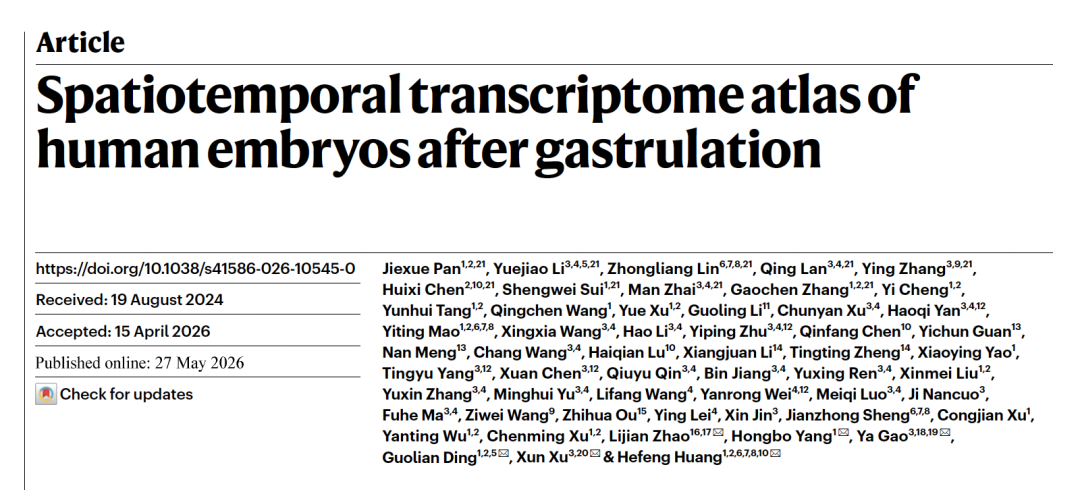
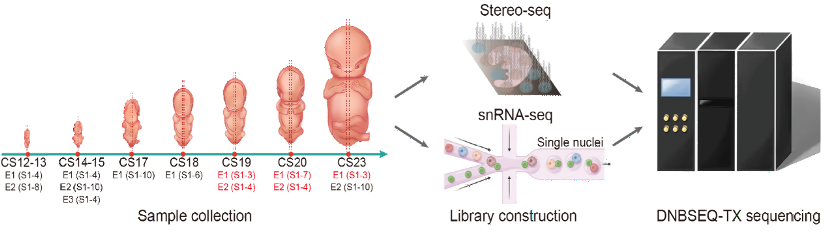
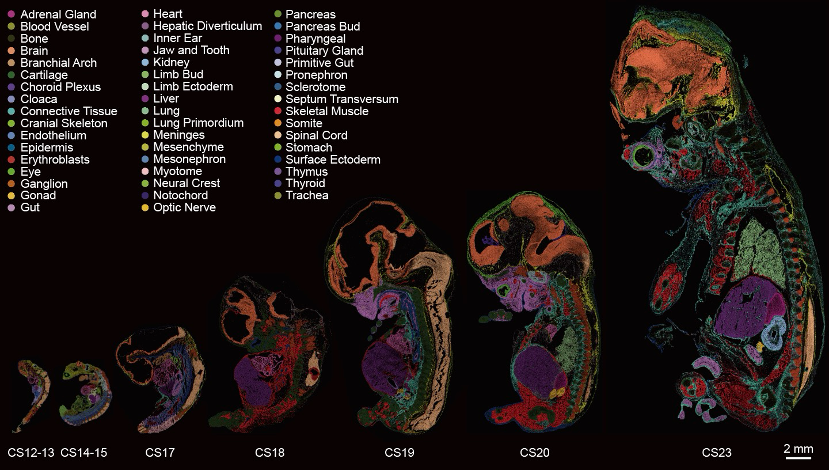
Combining Stereo-seq, single-nucleus RNA-seq and in-house spatial analysis pipelines, researchers constructed an unbiased system to map embryonic cell localization and gene regulation. Using 13 human embryos and 77 sagittal slices, they annotated 50 anatomical regions and 198 molecular substructures for continuous spatiotemporal tracing of multi-organ development. Major findings: RORA and KIAA1324L control cardiac pacemaker development to inform congenital arrhythmia treatment; neuronal developmental timelines were revised alongside an HMGA2 pathway linked to intellectual disability; a pan-embryonic viral receptor atlas and novel candidate imprinted genes were identified.
This breakthrough creates an unprecedented molecular map of early human development, helping scientists better understand organ formation and the potential origins of certain congenital diseases. Behind this breakthrough is Prof. Huang’s team’s long dedication to reproductive medicine and embryonic health — advancing our understanding of the beginnings of human life.
Link to the full article:
https://www.nature.com/articles/s41586-026-10545-0